
What Is Color Theory and Why Every Designer Should Learn It
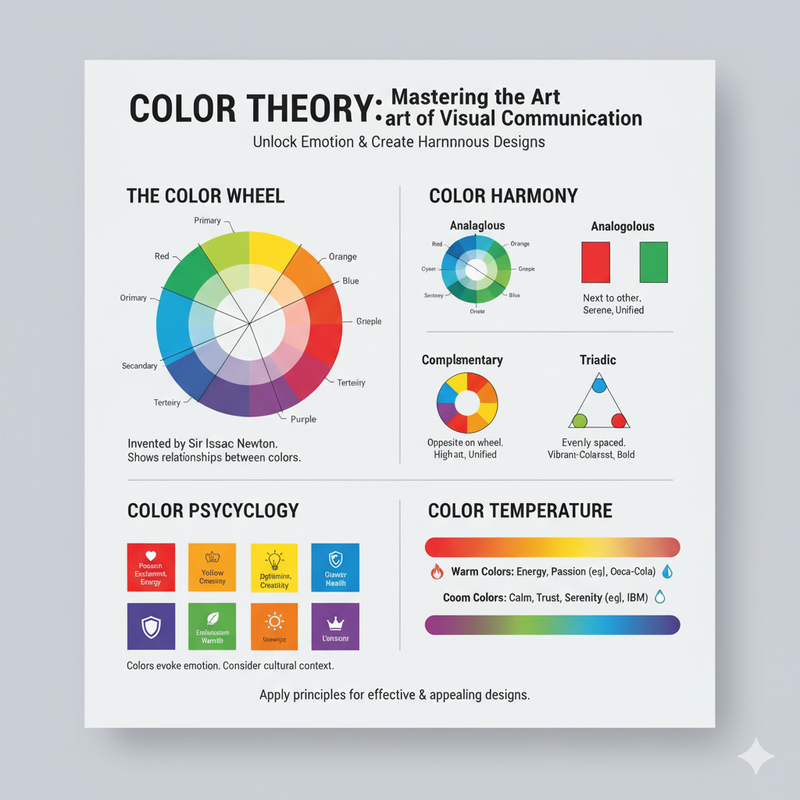
Dive into the world of color theory. Learn how to use warm colors like reds and yellows to create energy and cool colors like blues and greens to evoke calmness in your designs. Color theory is a crucial aspect of design that deals with the mixing of colors and the visual effects of a specific color combination. Understanding color theory can help you create more effective and appealing designs. The color wheel is the most basic tool for combining colors. The first color wheel was invented by Sir Isaac Newton. He split white sunlight into red, orange, yellow, green, cyan, and blue beams; he then joined the two ends of the spectrum together to show the natural progression of colors. The color wheel helps us understand the relationships between colors. Primary colors are red, yellow, and blue. They are the only colors that cannot be made by mixing other colors. Secondary colors are green, orange, and purple. They are created by mixing two primary colors. Tertiary colors are made by mixing a primary and a secondary color. Color harmony is the theory of combining colors in a pleasing way. Common harmonies include complementary, analogous, and triadic. Complementary colors are opposite each other on the color wheel. They create high contrast and can make a design 'pop'. Analogous colors are next to each other on the color wheel. They create a serene and comfortable design. Triadic colors are evenly spaced on the color wheel, creating a vibrant and dynamic feel. Color psychology is the study of how colors affect human behavior. Different colors can evoke different emotions. For example, red is often associated with passion and excitement, while blue is associated with calmness and trust. Understanding color psychology can help you create designs that communicate the right message to your audience. The context in which a color is used is also important. A color can have different meanings in different cultures. For example, in many Western cultures, white is associated with purity and weddings, while in many Eastern cultures, it is associated with mourning. It's important to be aware of these cultural differences when designing for a global audience. The temperature of a color can also affect its psychological impact. Warm colors like red, orange, and yellow are associated with energy and passion. Cool colors like blue, green, and purple are associated with calmness and serenity. By understanding and applying these principles, you can create designs that are not only beautiful but also effective.