
Understanding Color Temperature: Warm vs Cool Colors in Design
Color temperature is a fundamental concept in color theory that plays a profound role in shaping the emotional impact of a design. At its core, it's the idea that the color spectrum can be divided into two families: warm colors and cool colors. This division is deeply rooted in our psychological responses. We associate warm colors with the sun and fire, triggering feelings of comfort, energy, and passion. Conversely, we associate cool colors with water and the sky, evoking feelings of calmness, serenity, and professionalism. Mastering the use of color temperature allows a designer to act as an emotional architect, intentionally building a specific atmosphere for their audience. It's the difference between a website that feels cozy and one that feels sleek.
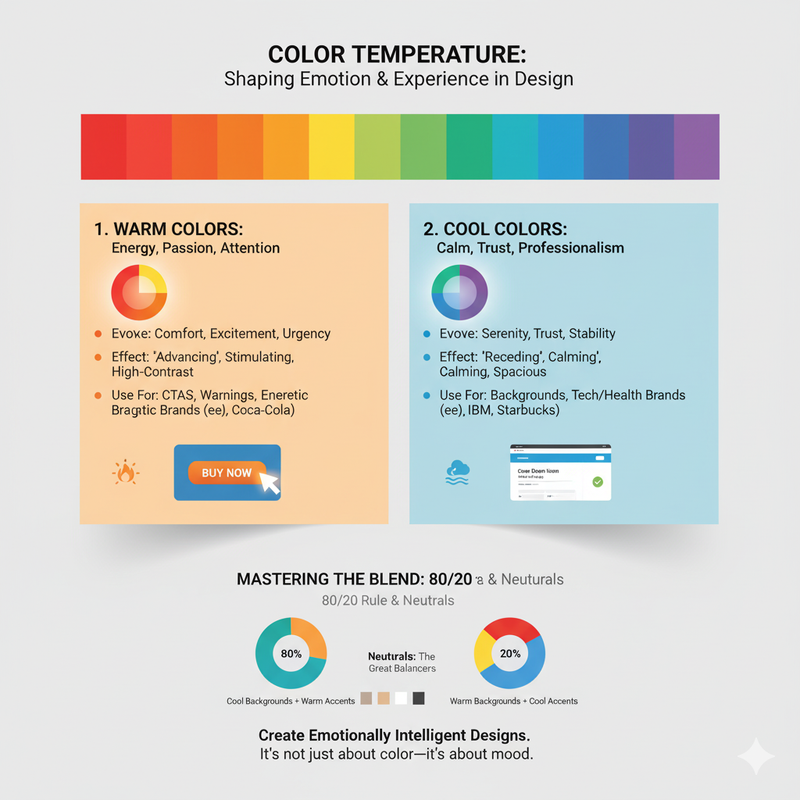
The color wheel provides a clear map for understanding color temperature. Warm colors—reds, oranges, and yellows—are known as 'advancing' colors because they appear to come towards the viewer. Their longer wavelengths are physically stimulating, making them effective for grabbing attention. Think of an orange 'Buy Now' button. These colors create a sense of urgency and importance. Brands that want to project energy and fun, like Coca-Cola and McDonald's, build their identity around warm colors. In UI, they are excellent for calls-to-action and error messages, but overuse can be overwhelming.
On the other side of the wheel are the cool colors: blues, greens, and purples. These are 'receding' colors that create a sense of space and openness. Their shorter wavelengths have a calming effect, promoting relaxation and peace. This makes them a perfect choice for brands that want to be perceived as trustworthy and professional. It’s no coincidence that tech companies (IBM, Intel), financial institutions (Chase, PayPal), and healthcare providers build their identities on blue. It communicates competence and stability. In UI design, cool colors are ideal for backgrounds and large content areas, as they create a clean, non-fatiguing user experience.
The true mastery of color temperature lies not in choosing one family over the other, but in skillfully blending them. A design using only warm colors can feel overwhelming, while one using only cool colors can feel cold and uninviting. The most effective designs often use a combination, following an 80/20 principle: let one temperature family dominate and use the other for accents.
- Cool Dominant with Warm Accents: This is a very common and effective strategy. Use a palette of blues and grays for the background to create a feeling of calm professionalism. Then, introduce a vibrant warm color like orange or red for your primary call-to-action buttons. The warm accent will 'pop' against the cool background, immediately drawing the user's eye to important actions.
- Warm Dominant with Cool Accents: This approach is bolder and more energetic, often used by brands in the food or entertainment industries. A dominant palette of reds or oranges creates immediate excitement. Cool accents, like a sharp blue, can then be used to provide visual relief and ground the design, preventing it from becoming too chaotic.
- Balancing with Neutrals: Neutral colors like gray, beige, and white are the secret weapon for balancing color temperature. They act as a buffer between warm and cool colors, allowing them to coexist harmoniously. Ample use of white space or a sophisticated gray background can allow both a vibrant red and a calming blue to have their own space without clashing.
Understanding color temperature is about understanding the emotional narrative that these color families tell. It's about using this knowledge to create a specific mood, guide the user's eye, and reinforce your brand's core message. The interplay between warm and cool is the fundamental rhythm of color design; learning to conduct it is the key to creating masterpieces.