
Top Color Trends for Designers in 2026
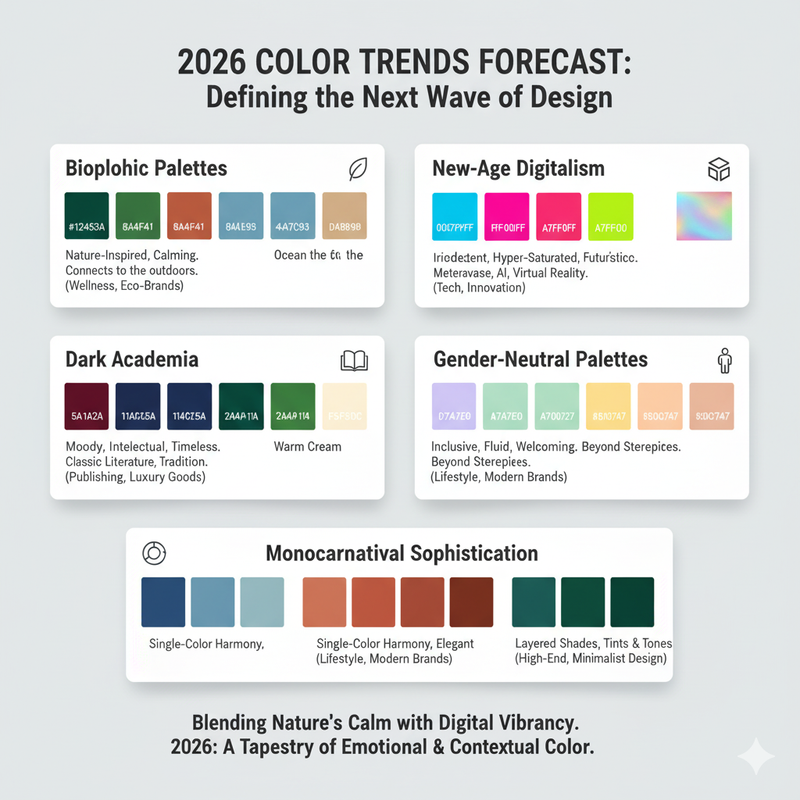
Look into the future with our forecast for 2026's biggest color trends. From biophilic design to new-age digitalism, see what colors will define the next wave of design. As we move further into the decade, the world of design is being shaped by a unique blend of technological advancement and a renewed appreciation for the natural world. This duality is reflected in the color trends that are emerging for 2026. We're seeing a push towards colors that are both digitally native and deeply organic. It's a fascinating mix of the hyper-real and the authentically natural. Here's our forecast for the top color trends that will define the design landscape in 2026. First, we're seeing the continued rise of 'biophilic' palettes. These are colors that are inspired by nature: earthy browns, deep greens, ocean blues, and sandy beiges. This trend is a reaction to our increasingly digital lives. We're spending more and more time indoors and on screens, and we're craving a connection to the natural world. Biophilic design is all about bringing the outdoors in, and color is a key part of that. Expect to see more websites, apps, and brands using these grounding, calming colors to create a sense of peace and well-being. At the other end of the spectrum, we're seeing the emergence of 'new-age digitalism'. This trend is all about embracing the artificial, the synthetic, and the surreal. It's inspired by the metaverse, AI-generated art, and the aesthetics of virtual reality. Think iridescent sheens, holographic effects, and hyper-saturated, almost-neon colors. These are colors that could only exist in a digital space. They are bold, energetic, and futuristic. This trend is perfect for brands that want to position themselves as innovative, forward-thinking, and on the cutting edge of technology. Another major trend is the return of 'dark academia' palettes. This aesthetic is inspired by classic literature, old universities, and a love of learning. It's all about rich, moody colors like deep burgundy, forest green, and navy blue, paired with warm neutrals like cream and beige. It's a sophisticated and intellectual look that conveys a sense of history, tradition, and wisdom. This trend is a reaction against the fast-paced, disposable culture of social media. It's about a return to substance, quality, and timeless elegance. We're also seeing a move towards 'gender-neutral' palettes. For years, color has been heavily gendered, with pink for girls and blue for boys. But as our understanding of gender becomes more fluid, so too does our use of color. We're seeing more brands using palettes that are not tied to traditional gender stereotypes. Think soft lavenders, mint greens, and sunny yellows. These are colors that are inclusive and welcoming to everyone. Finally, we're seeing a renewed interest in 'monochromatic' palettes. This is the art of using a single color in a range of shades, tints, and tones. A monochromatic palette can be incredibly sophisticated and elegant. It creates a sense of harmony and unity. But it can also be bold and dramatic, depending on the color you choose. A monochromatic red palette will feel very different from a monochromatic blue one. The key to a successful monochromatic palette is to create enough contrast between the different shades to ensure readability and create visual interest. As we look ahead to 2026, it's clear that color will continue to be a powerful tool for communication and expression. The trends we're seeing reflect a world that is grappling with complex issues, from our relationship with technology to our understanding of identity. As a designer, it's important to be aware of these trends, not so you can copy them, but so you can understand the cultural context in which you are working. The most successful designs will be those that tap into these trends in a way that is authentic to their brand and resonant with their audience.