
How to Use Neutral Colors for Elegant Designs
In a world saturated with vibrant colors, there is a unique power in the understated elegance of neutral colors. Neutrals—black, white, gray, and the vast spectrum of beiges and creams—are the unsung heroes of the design world. They are the foundation upon which great design is built, providing balance, creating structure, and allowing more vibrant accent colors to truly shine. While they may seem 'boring' at first glance, a masterful use of neutrals is the secret behind many of the most timeless and sophisticated interfaces. From the clean aesthetic of Apple to the quiet luxury of high-end fashion brands, neutrals are used to communicate quality, professionalism, and a sense of calm. They create visual breathing room and direct the user's focus to what truly matters: the content.
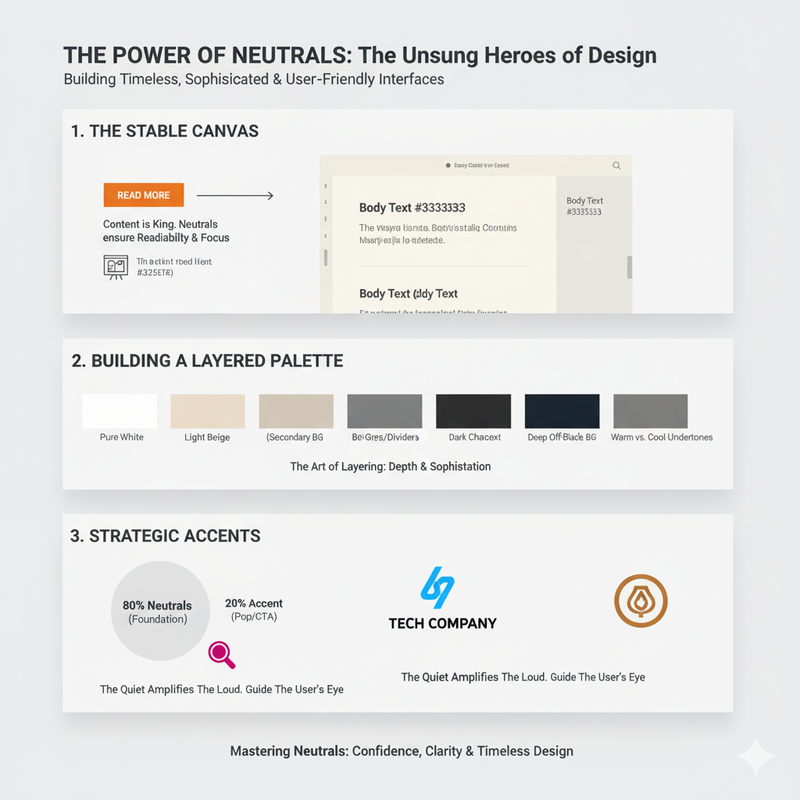
The primary role of neutral colors is to provide a stable, non-distracting canvas. Think of them as the walls of an art gallery; their purpose is to fade into the background, allowing the artwork (your content) to take center stage. A neutral background, whether it's a crisp white or a deep charcoal, ensures maximum readability and allows your brand's primary colors to pop. This is why content-heavy websites almost universally rely on a foundation of neutral colors.
However, using neutrals effectively is more complex than simply setting your background to white. The true artistry lies in building a rich, layered palette of multiple neutral tones. A design that uses only one shade of gray can feel flat. A sophisticated neutral palette might include:
- A pure or off-white for your primary background.
- A light gray or beige for secondary backgrounds, such as sidebars or cards, to create a subtle sense of depth.
- A mid-range gray for borders, dividers, and placeholder text.
- A dark gray or charcoal (instead of pure black) for primary text. Using a very dark gray (like #333333) instead of pure black reduces the harshness of the contrast against a white background, lessening eye strain.
- A very dark neutral for 'dark mode'. An off-black is often a better choice for a background than pure black as it feels less stark.
Another key aspect is understanding their 'temperature.' Not all grays are created equal; they can have subtle warm (yellow/brown) or cool (blue/green) undertones. For a harmonious design, it's best to stick with one temperature. A palette of warm neutrals will create a feeling of coziness and comfort. Conversely, a palette of cool neutrals will create a feeling of sleekness and modernity, ideal for tech or financial companies.
While neutrals form the foundation, their true power is often revealed when paired with a strong accent color. A predominantly neutral interface provides the perfect stage for a single, vibrant color to make a dramatic impact. Imagine a minimalist, gray-scale website. Now, add a single, vibrant red for the 'Contact Me' button. That button becomes the most powerful element on the page. The quietness of the neutral palette amplifies the voice of the accent color, giving it immense visual weight. This technique allows you to guide the user's attention with surgical precision.
Ultimately, neutral colors are the language of sophistication. They demonstrate a designer's confidence and respect for the content. A well-crafted neutral palette isn't boring; it's a sign of maturity in design. It creates a sense of calm and order, reduces cognitive load, and provides the perfect backdrop for your brand's story to unfold. The next time you start a project, don't just think about your bold brand colors. Start with your neutrals. Build a rich, layered foundation, and you'll find that it elevates every other element of your design.